Education Program for Venezuelan Migrants – PRM 4
Ecuador
Objective
To provide educational opportunities to migrant children, adolescents, and youth, especially Venezuelan and from the host community, who as a result of migration and the pandemic have interrupted their studies and are outside the education system or at risk of dropping out.
Problem Statement
The educational problems faced by migrant children and adolescents that the program seeks to address are:
- The high proportion of migrant children and adolescents, especially Venezuelans, who do not attend school, resulting from among other causes the lack of knowledge of current regulations by public officials and lack of information by immigrant families.
- Severe educational lag, that is, academic delay of two or more years in students, which on one hand hinders their enrollment and on the other puts their permanence in school at risk.
- High risk of school dropout among children due to low academic performance, especially because they lack basic reading, writing, and mathematics skills needed for their grade level.
- Child labor, begging, and domestic work (both inside and outside the home, carried out mainly by girls) that causes school dropout or poor academic performance.
- Discrimination and xenophobia in school environments that greatly hinder the adaptation of migrant children and puts their permanence in school at risk.
Components and Activities
Five educational programs are implemented in coordination with the Ministry of Education:
- a) Immediate School Reintegration: Aimed at supporting the process of insertion/reintegration of children and adolescents into the education system through close accompaniment of their families to carry out the enrollment process.
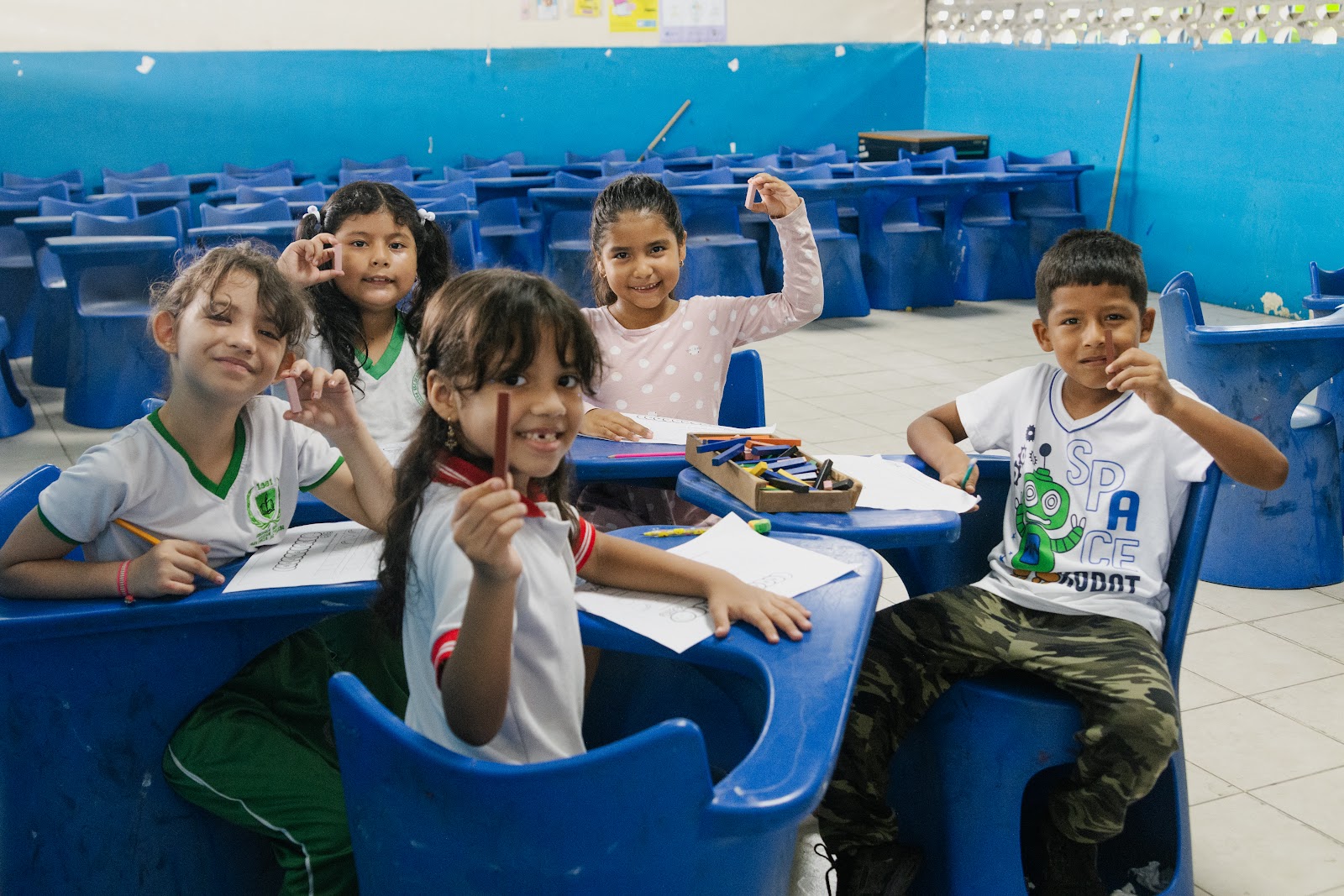
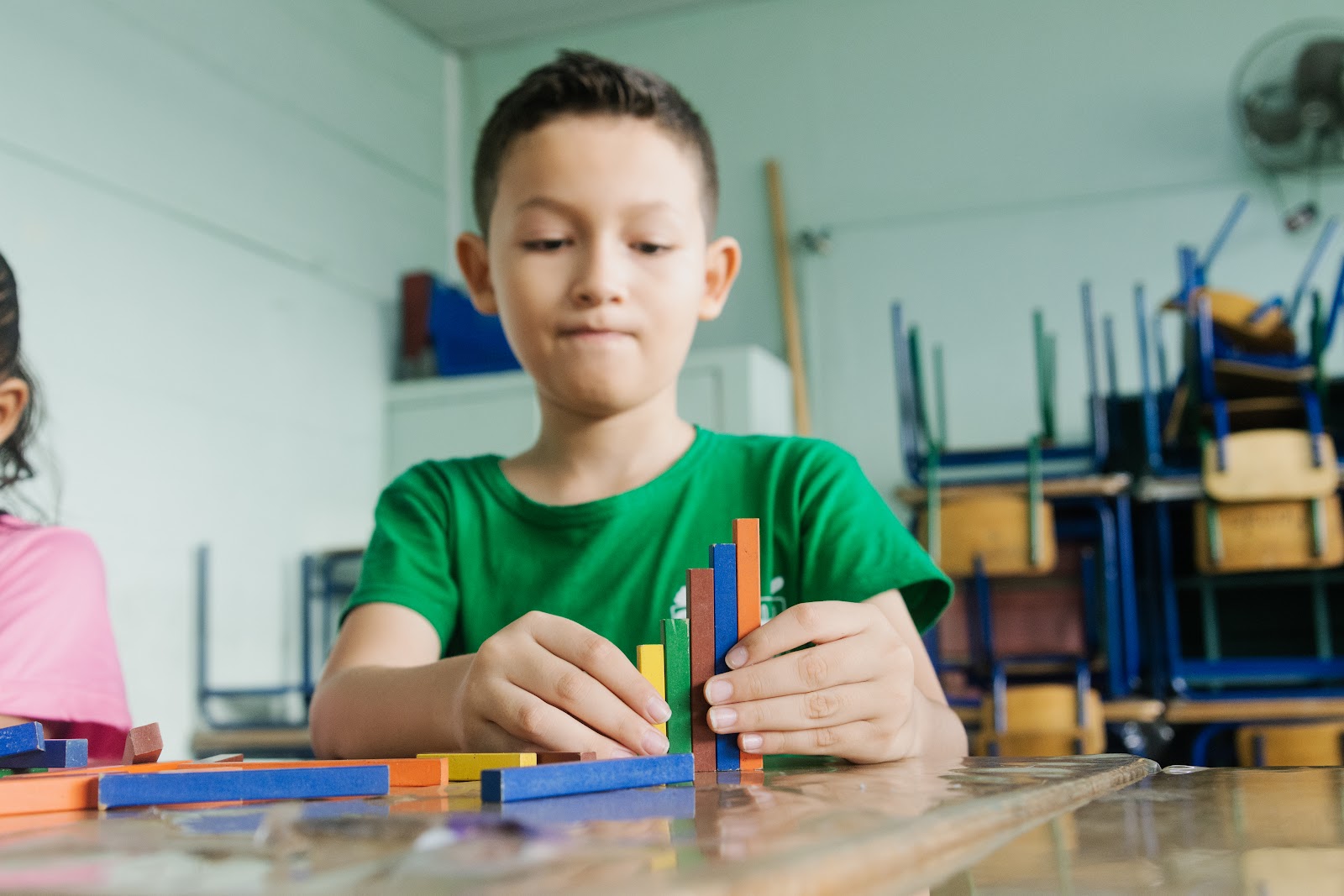
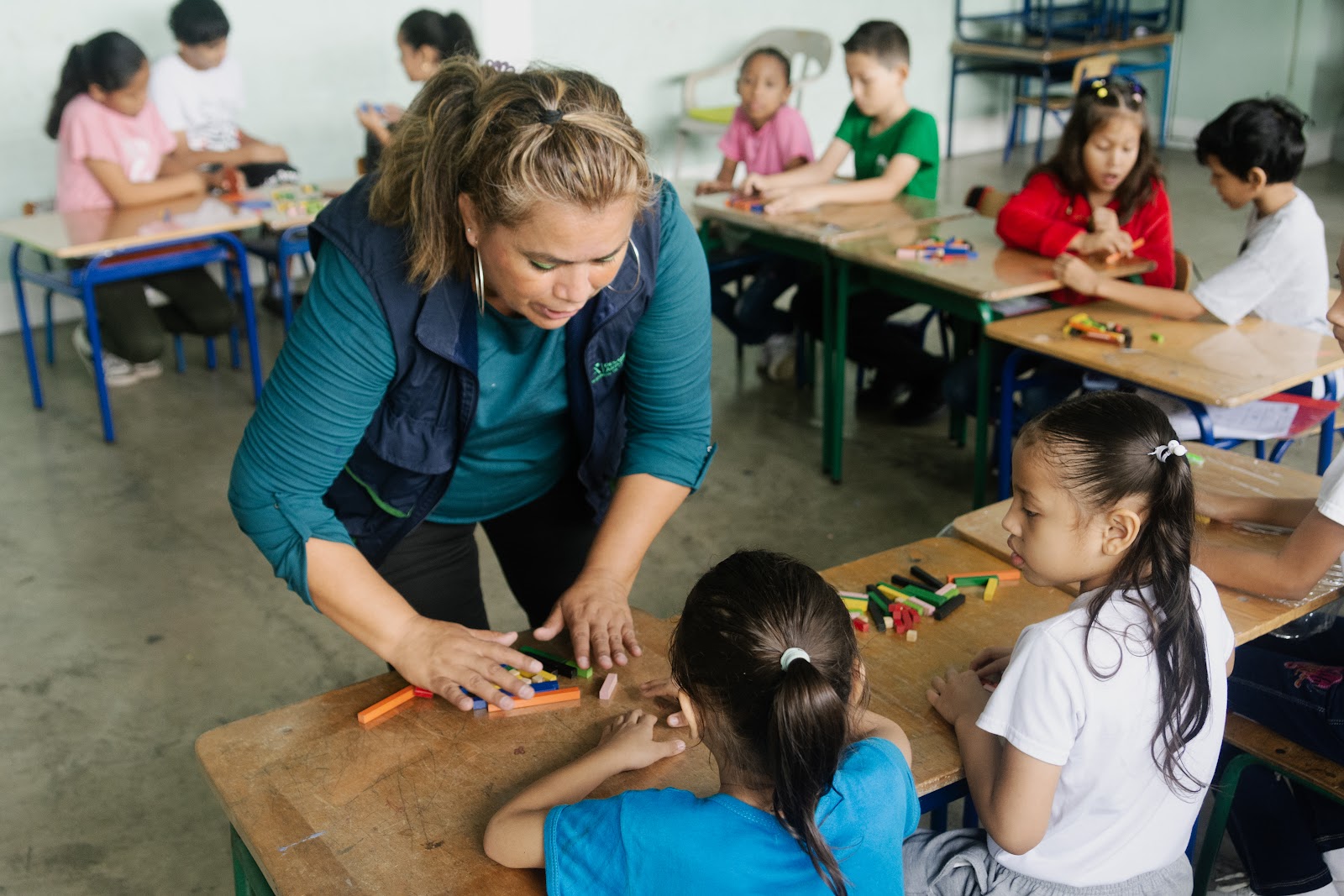
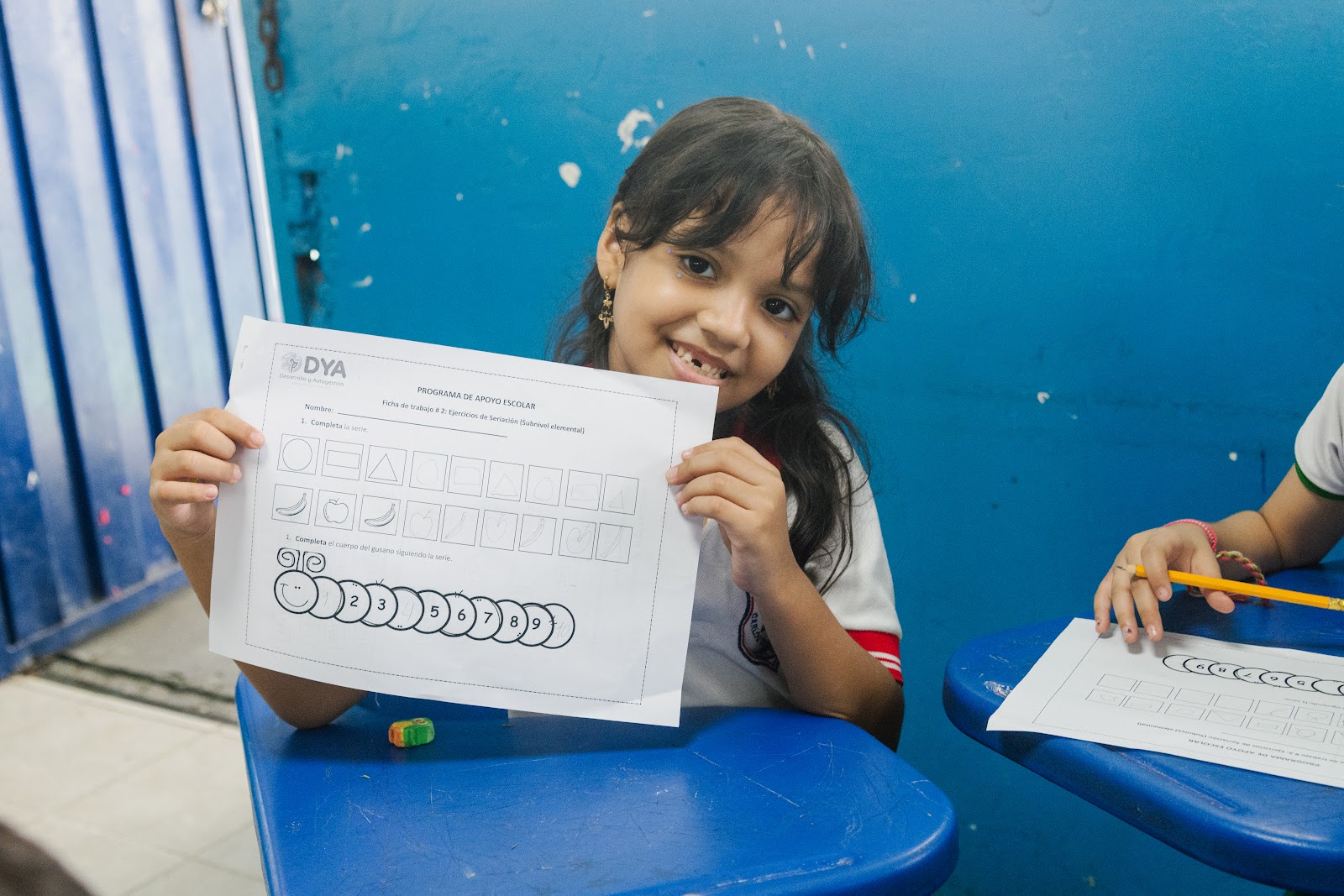
- b) School Support: Boys and girls with poor academic performance run the risk of abandoning their studies. With the committed work of our teaching and technical team, in just 10 weeks we strengthen their skills in reading, writing, and basic operations, ensuring their permanence in the education system.
- c) Grade-Level Recovery and Pedagogical Acceleration NAP: This program seeks for boys, girls, and adolescents aged 8 to 18 in educational lag condition, through grade-level recovery and acceleration of their learning process and accompaniment in building life projects, to eliminate or reduce the educational lag condition, thus contributing to their permanence in the education system. The educational service implemented follows the same guidelines governing NAP operations at the national level by the Ministry of Education.
- d) Eradication and Prevention of Child Labor (ETI): Many boys, girls, and adolescents in our country work in dangerous activities or are at risk of doing so. This program offers them an extracurricular space to develop artistic and recreational activities that remove them from labor activities while ensuring their schooling and promoting their comprehensive development.
- e) Welcome Schools (pedagogical support to teachers): This program prepares teachers and administrators of schools with higher concentration of Venezuelan migrant children to facilitate their integration into the educational institution. It is implemented in 20 selected schools whose main characteristics include having a significant number of children and youth in human mobility situations.
- f) Technical Vocational Training Program: Directed especially at young women without access to regular education, this program offers them in-person courses of between 90 and 120 hours in technical trades and soft skills so that young people have more and better employment opportunities and can generate higher income and, through this path, break the cycle of poverty.
The program integrates training actions for flexible modality teachers, research projects on mobility and education in Ecuador, and a higher education training course with emphasis on care for populations in human mobility conditions.
Target Group
Migrant children and adolescents, especially Venezuelan, and from the host community in Quito, Guayaquil, Manta, Cuenca, Huaquillas, and Tulcán.
Partners and Counterparts
Ministry of Education
Financing Organizations
The Department of State Bureau of Population, Refugees, and Migration (PRM) / Regional Program on Migration of the United States Department of State
Highlighted Results
Results from 2021 to 2024:
- 4,305 children and adolescents reintegrated into the school system.
- 9,440 children and adolescents improved their literacy and mathematics skills, reducing school dropout.
- 4,442 children and adolescents with educational lag completed their studies through NAP.
- Total of 26,571 children and adolescents benefited.